
Choosing the right outdoor advertising format starts with understanding what each one does best. Digital billboard advertising gives you speed, flexibility, and dynamic creative capability — the ability to change your message in hours, run time-sensitive promotions, and deliver multiple executions within a single campaign. Static billboard advertising gives you something equally valuable: undivided, uninterrupted ownership of a high-impact location for the full duration of your flight. Both formats drive real results. The question is which one aligns with your campaign objectives, your budget, and how you want your brand to show up in the market.
How Digital Billboard Advertising Works
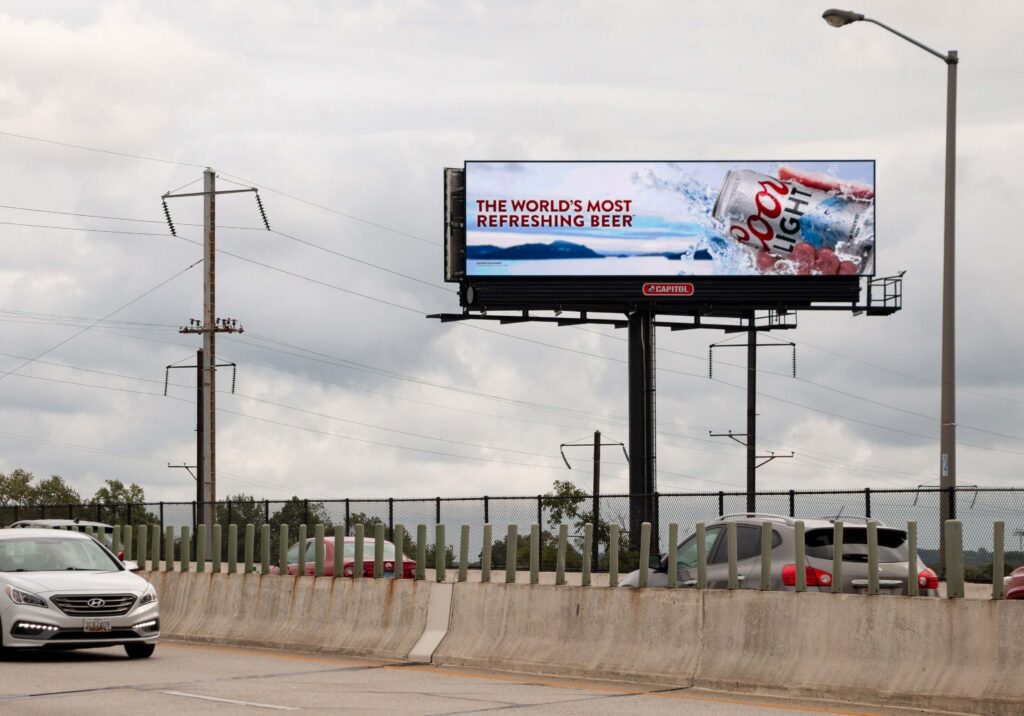
A digital billboard is an LED screen that displays rotating advertising from multiple advertisers. The standard format runs 8-second spots in a 64-second loop — typically six to eight advertisers sharing the screen in rotation. Advertisers submit digital creative files, with no printing or installation required. Creative can be updated same-day, making digital billboard advertising the fastest-to-market format in outdoor advertising.
Modern digital billboards use high-resolution LED technology — typically 10mm to 16mm pixel pitch for highway units — with brightness levels that maintain full visibility in direct sunlight. Full-motion video capability is available on select units, opening up creative possibilities that static formats simply cannot match.
Capitol Outdoor operates digital billboards across nine major markets: Baltimore (I-95, I-895, I-83), Washington DC (Tysons Corner, National Harbor), Los Angeles (Sunset Blvd, Santa Monica Blvd, Calabasas), Atlanta (Peachtree St downtown, I-75 near Hartsfield-Jackson), Detroit (downtown sports district), Miami (I-95 near Fort Lauderdale Airport), Sacramento (I-80 Vacaville, downtown wallscapes), Chicago (Fashion Outlets near O’Hare), and Cleveland (Beachwood).
Benefits of Digital Billboard Advertising
Digital billboards are the right choice when flexibility is the priority. Here is what they offer that static cannot:
- Fast creative updates — change your message in hours, not weeks. No reprint. No reinstallation. Submit a new file and it is live.
- Multiple messages — run two or three creative executions in the same campaign window to test messaging or serve different audiences at different times of day.
- Time-sensitive campaigns — event promotions, limited-time offers, product launches, and seasonal messaging all benefit from digital’s speed-to-market advantage.
- Lower entry cost — because the rotation is shared among multiple advertisers, the per-advertiser cost is typically lower than a comparable static buy on the same structure.
- Programmatic buying — digital billboard inventory can be purchased through DOOH buying platforms, enabling impression-based buying, audience targeting, and cross-channel campaign integration.
Advantages of Static Billboard Advertising
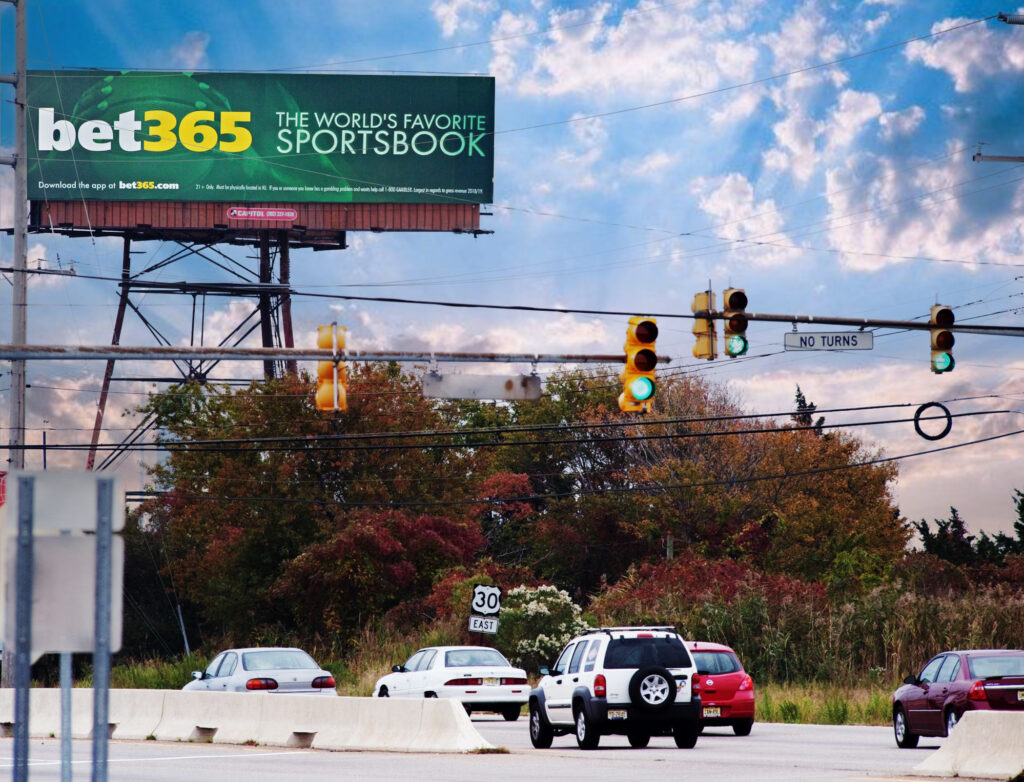
Static billboards — traditional vinyl or mesh installations on illuminated structures — have been the foundation of outdoor advertising for a century. They remain the format of choice for a specific and important set of campaign objectives.
The defining advantage of a static billboard is full-face ownership. One advertiser. One message. 24 hours a day for the entire flight. There is no rotation, no sharing, no competition for attention. Every person who passes that location sees your brand — not your brand one-eighth of the time.
Static is the right choice for long-term brand awareness campaigns where consistency and repetition are more important than flexibility. For a healthcare system building awareness over a 12-month period, a financial services firm establishing market presence, or a retail brand reinforcing a single clear message — static delivers that sustained, uninterrupted presence in a way digital rotation cannot match.
Budget and Campaign Considerations
The cost difference between digital and static is more nuanced than it first appears. A digital billboard unit costs more per structure than a static unit — but the rotation means multiple advertisers share that cost, bringing the per-advertiser rate significantly lower. A static billboard at the same location costs the same or more, but gives one advertiser the full face.
For production costs, digital wins clearly. Static billboards require vinyl printing ($200–$600 for a standard bulletin) and installation, plus reprinting for every creative change. Digital requires only a digital file — no production cost beyond the design itself.
The campaign length consideration also favors digital for short flights and static for long ones. A four-week promotional campaign is well-suited to digital. A 26-week brand presence campaign is often more cost-effective and impactful on static, where the fixed cost amortizes over a longer period and the full-face ownership compounds over time.
The Most Effective Campaigns Use Both
The strongest outdoor advertising strategies do not choose between digital and static — they use both in a coordinated way. A typical approach:
- Static billboards anchor the campaign — consistent presence on the highest-impression corridors, building frequency and familiarity over the full flight
- Digital billboards layer in timely messaging — event tie-ins, seasonal promotions, or campaign phases that need quick deployment
- Wallscapes and kiosk networks add urban presence — large-format street-level visibility in the neighborhoods where your audience lives and works
Capitol Outdoor’s media portfolio includes all three formats across 28 markets. Our team can help you build a plan that uses the right mix of digital billboard advertising, static bulletins, wallscapes, and digital kiosk networks for your specific campaign objectives.
According to the Out of Home Advertising Association of America (OAAA), OOH as a category delivers some of the strongest CPM efficiency of any major media format — and combining formats within a market amplifies that efficiency by reaching audiences across multiple environments and contexts.